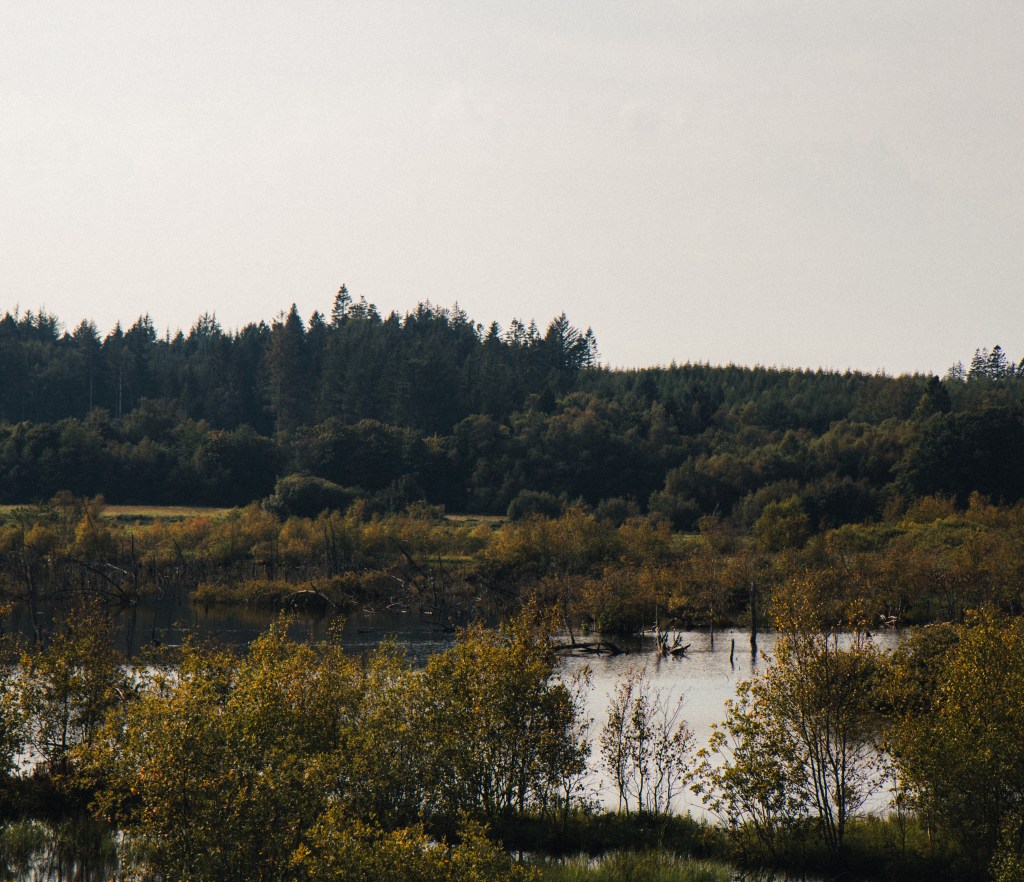
Several years ago now, I had a conversation with a Danish friend about how incredibly difficult it can be to locate peat bogs via modern maps. I wondered if perhaps this was because bogs don’t often rank very high as tourist destinations (some of the bogs here in Maine being an exception), but my friend was quick to point out that many of these wetlands simply don’t exist as they once did. Peat was harvested as a fuel source for thousands of years without significantly impacting the ecology of raised bogs throughout Europe, but technological advancements in the 19th and 20th centuries disrupted this balance. Bogs were methodically drained and the peat harvested in increasingly large quantities, with the drained and harvested land being repurposed for agriculture. Today, over 95% of the raised bogs in Denmark—once covering approximately a quarter of the land mass—have ceased to exist [Stenild 2011].
So, when I visited Denmark in September 2023 in order to conduct research for this project, I wasn’t holding my breath that I’d be able to visit the bogs where Tollund Man or Grauballe Man were found. I was pleasantly surprised when director Ole Nielsen at the Silkeborg Museum informed me that there was a nature trail at Bjældskovdal Peat Bog that included signage in the location where Tollund Man was unearthed. The bog, he explained, had in fact been drained and harvested in centuries past, but the Danish Ministry of the Environment had since undertaken efforts to “rewet” the land. Rewetting is not necessarily a restorative process in that the reintroduction of water does not immediately reproduce the conditions which caused peat to form, but it is beneficial in reducing carbon emissions, to which drained bogs contribute significantly [Kreyling 2021].
Bølling Sø (the name of the reconstituted lake) is located about 10km from Silkeborg. The address for the parking lot closest to Tollund Man’s discovery site can be found at Fundervej 71, 7442 Engesvang, Denmark. There is a sign in the parking lot that shows the location on a map.
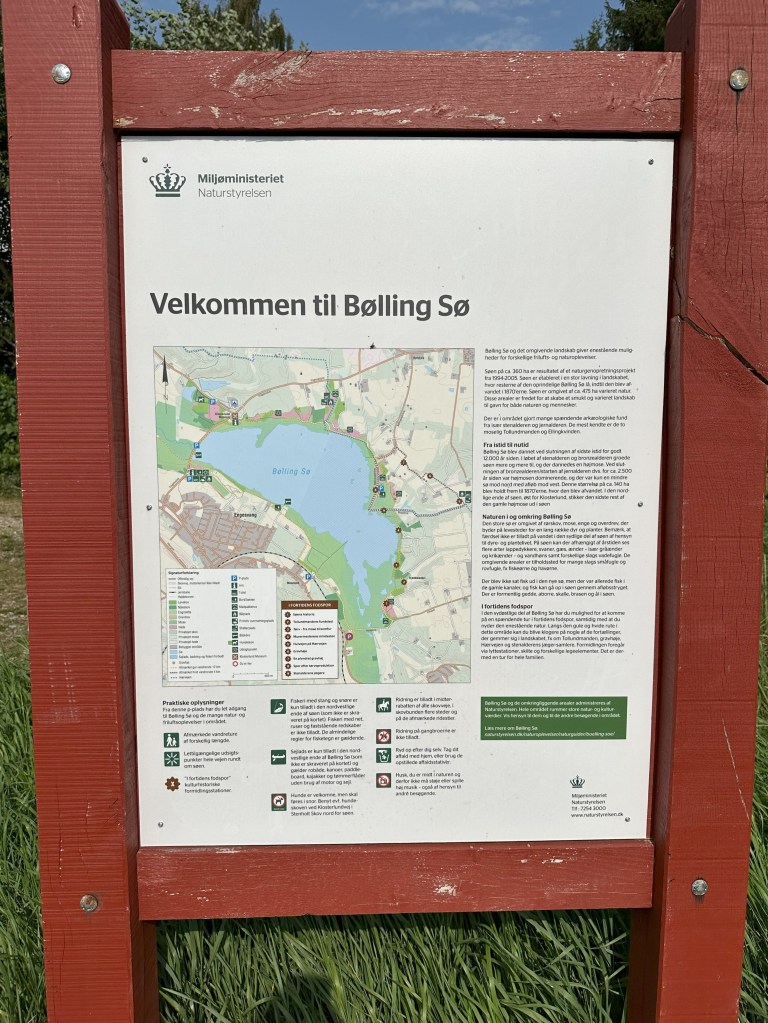
The hike was easygoing, around 2km (1.2mi) round-trip with little to no elevation gain. Along the way, we took in picturesque views of the reconstituted lake and heather-covered hillsides with grazing sheep. It is possible to make a few wrong turns along the way, as there are some trails that branch off into the woods and nearby farmland, so it doesn’t hurt to take a photo of the map before setting out just to ensure you don’t get lost along the way.
Obviously, accessibility is going to be an issue with most hiking trails. This trail was relatively flat, and given the relatively short distance, it might be possible to access it via wheelchair or other mobility aid. However, it is a gravel trail and therefore subject to natural imperfections (rocks, puddles, etc.) that might hinder accessibility.

The approximate site of the Tollund Man’s discovery is marked by a plaque fixed to a standing log, which details the date of the discovery as well as the names of the peat cutters who discovered him.

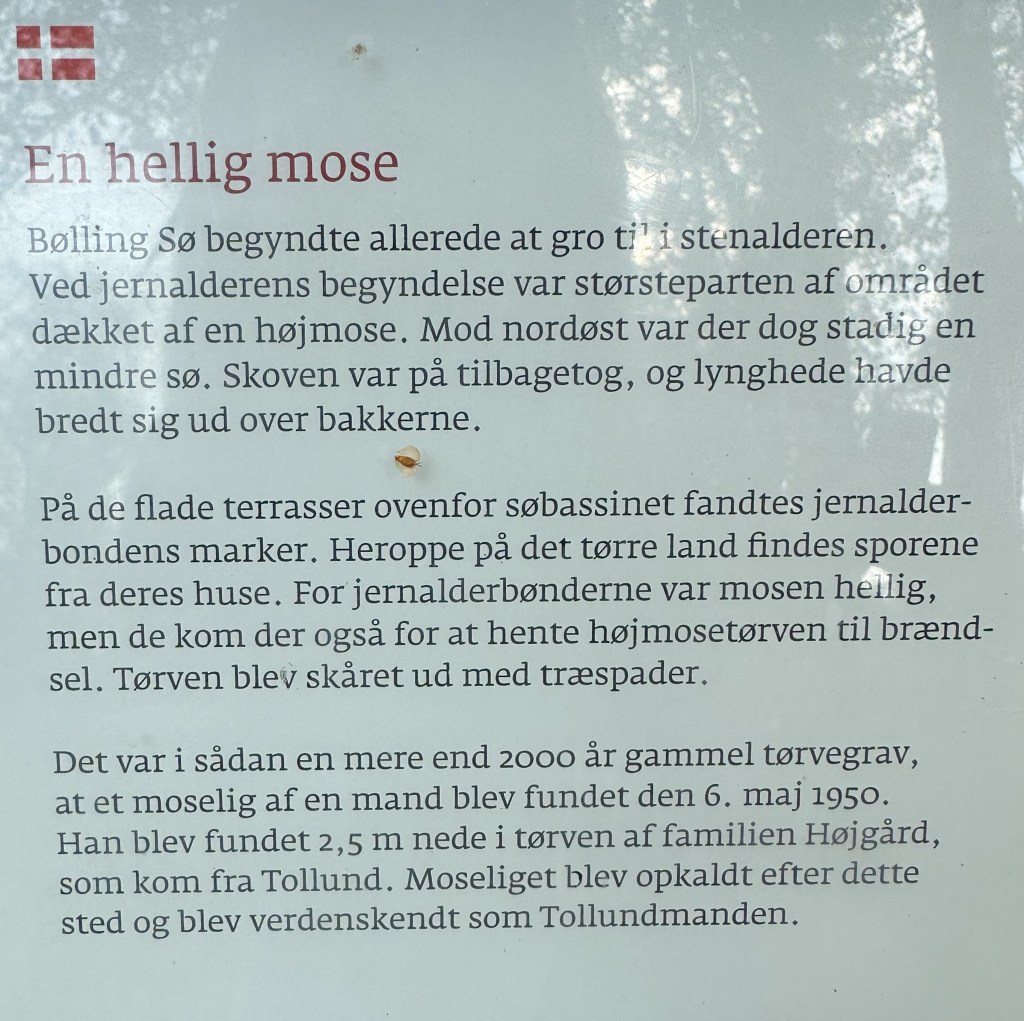
There are a few educational activities installed in this location as well as a brief written summary of the bog’s history in English, Danish, and German. I admired the obvious effort that was made to transform this into an educational space without overpowering the landscape.


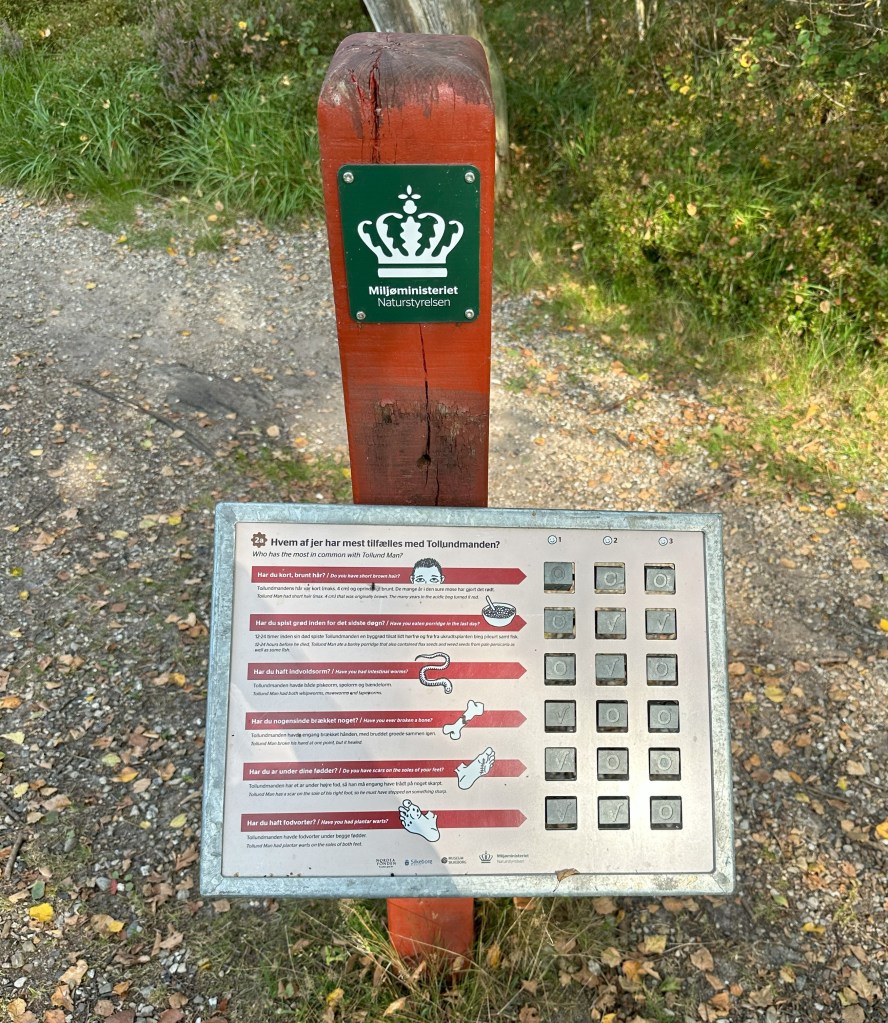
There was also a wind-up audio component that explained a bit about the Tollund Man and an iron cut-out that showed his silhouette lying in the position he was discovered. I took video of both of these features as well as the surrounding area, embedded below. According to the audio, the precise location of the Tollund Man’s discovery was approximately 50m northeast of the current marker, in a lightly wooded area off the trail. Presumably this was done to minimize interference with the local landscape.
Having not expected to be able to visit Bjældskovdal Peat Bog at all, I was pleasantly surprised by both the ease of access and the attention to detail that went into this location. While it is not a museum display in the traditional sense, the Danish Ministry of Environment took great care installing interactive markers that contextualize the importance of this archeological site through mediums that will appeal to a wide array of visitors.
 The Bog Body Resource
Leave a comment